
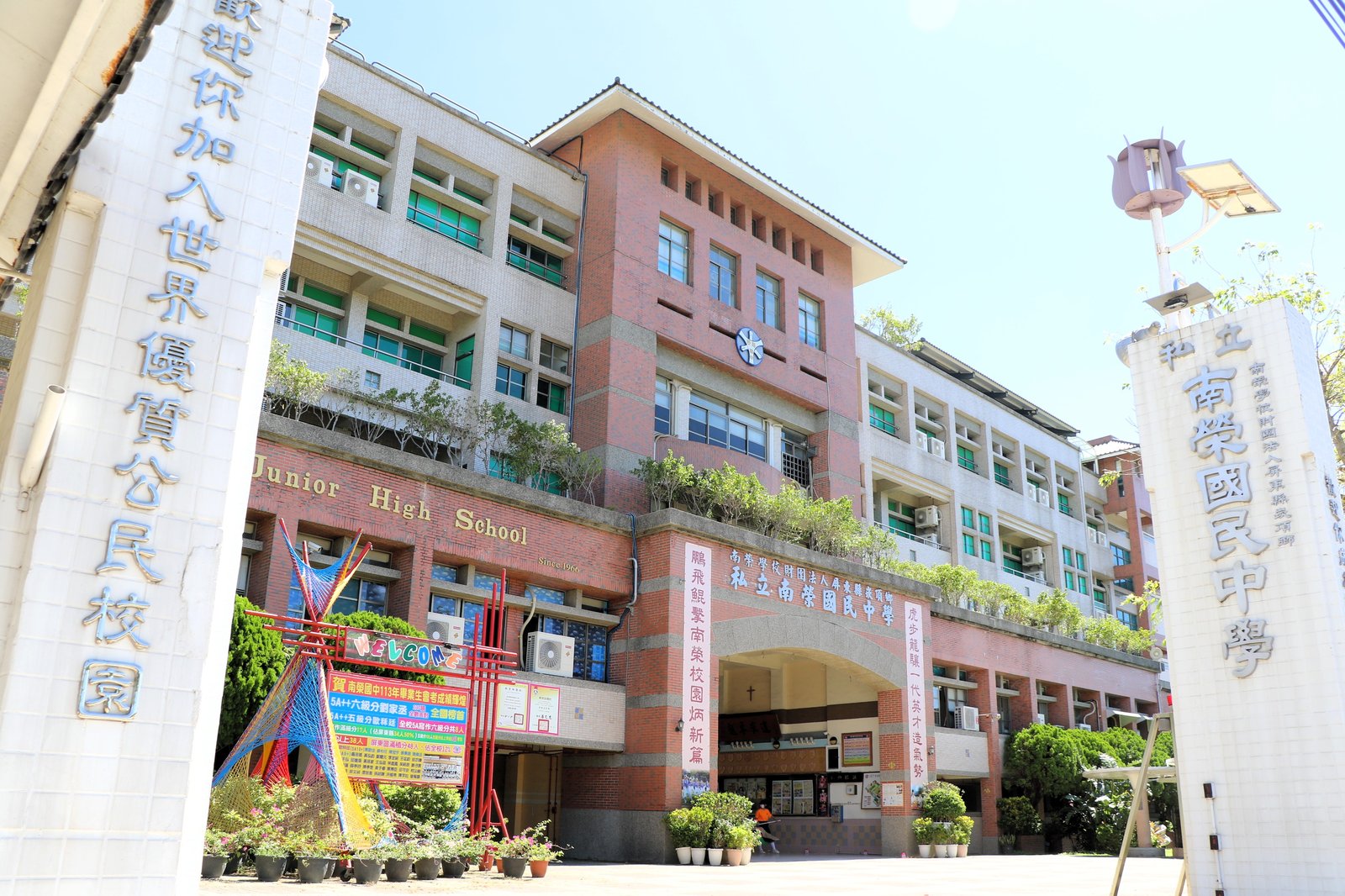
Kanding has no public junior high, no bank, no hospital — and the fewest people of any lowland township in Pingtung. That a child here can still receive a full education is the quiet achievement of one stubborn school.
A village without a school
When Taiwan introduced nine-year compulsory education in 1968, the government could not build a public junior high in every township. So it called on suitable private schools to serve as "substitute" public junior highs — charging only public-school fees, bound to the state by contract, much like a charter school today. Nan Jung answered. By law it turns no local child away, and for nearly sixty years it has admitted every child in its district. In the early days, when one in three local graduates left to study elsewhere, its teachers went door to door — two or three times a family, sometimes more — to bring the children home.
The promise that broke
The government had promised to make up the gap in fees. In the end it funded only eighty per cent of teachers' salaries — and nothing at all for the principal's and staff's pay, nor for buildings, equipment or welfare, for decades. Of the hundred or more schools that became substitute junior highs, almost all withdrew within five years. Today just four remain in all of Taiwan. Nan Jung is one of them.
"Why does the government not keep its word? It urged us to found schools, made us substitute junior highs — yet never gave the reasonable funding it promised."「なぜ政府は約束を守らないのか。私学を興すよう励まし、代用国中とさせておきながら、約束した正当な補助を与えてはくれなかった。」
Selling everything
Founder Chen Yao-huo, a graduate in economics from National Taiwan University, gave up a teaching post at a girls' high school and, at forty-five, built his school in the poorest township of all — to "open up educational wilderness." Within three years, board members called it a losing venture and withdrew their funds. So he mortgaged and sold the family's property, and borrowed in his children's names, to keep the doors open. He worked for forty years, and carried debt for forty years. His wife — herself a survivor of the Nagasaki bombing — gave a lifetime's earnings, and her own inheritance, to the school.
He bore misunderstanding, too. Accused of running the school for profit, he received hate mail — even funeral money sent to his home. He never showed those letters to his family; they found them only when sorting his things after he was gone. There were petitions to close the school. He met it all with a single phrase he set for himself: to burn, and yet not be consumed.
"He worked for forty years — and carried debt for forty years, a burden that did not end even at his death."「四十年働き、四十年、借金を背負った。その重荷は、死してなお終わらなかった。」
Why it still matters
Recognition came late. A grant of nearly sixty million dollars finally built the administration hall; the founder and both his daughters each received the nation's highest honor for private education. Nan Jung stands today as the most successful case of a private school carrying public compulsory education — a pioneer of public–private partnership now studied as a model. A tiny school gate; a great and far-reaching aspiration.
"Nan Jung has become a rare flower in the wilderness, a great tree in the desert."「南榮は、荒野に咲く一輪の奇花となり、砂漠にそびえる大樹となった。」
← Back崁頂には、公立中学も、銀行も、病院もありません。屏東の平地の郷で、いちばん人口の少ない土地です。それでも、この村の子どもが十分な教育を受けられる——それは、一つの頑固な学校が、静かに成し遂げてきたことなのです。
学校のない村
1968年、台湾が九年国民義務教育を始めたとき、政府はすべての郷に公立中学を建てることができませんでした。そこで、条件の整った私立学校に「代用国民中学」となるよう求めたのです。学費は公立並みに抑え、行政契約で国と結ばれる——いまで言う「チャータースクール」に近い仕組みです。南榮はその求めに応えました。法により地元の子を一人も拒まず、六十年近く、学区のすべての子を受け入れてきました。かつて地元の卒業生の三人に一人が他所へ流れていた頃、教職員は二人一組で家々を訪ね、一家に二度三度——時にはそれ以上——足を運んで、子どもたちを呼び戻したのです。
破られた約束
政府は、学費の差額を補うと約束していました。けれども実際に補助されたのは、教員給与のわずか八割。校長や職員の給与、校舎も、設備も、福利も、何十年にわたって一切補助されませんでした。代用国中となった百あまりの学校は、その多くが五年以内に手を引きました。いま、台湾全土で残るのはわずか四校。南榮は、その一つです。
— Founder Chen Yao-huo— 創立者 陳耀火
変賣一切 — 田に宝を埋めて
創立者・陳耀火は、国立台湾大学経済学部を出て、女子高の教職を辞し、四十五歳で、もっとも貧しい郷に学校を建てました。「教育の荒野を切り拓く」ために。創立から三年と経たぬうちに、理事たちは「赤字経営だ」と資金を引き上げます。それでも彼は、家屋敷を抵当に入れ、売り払い、子どもたちの名で借金をして、学校の扉を開きつづけました。四十年働き、四十年、借金を背負いつづけたのです。長崎の原爆を生き延びた夫人もまた、生涯の稼ぎと、自らの遺産までも、この学校に捧げました。
彼は、誤解にも耐えました。学校で儲けていると謗られ、嫌がらせの手紙が——香典まで——自宅に届きました。その手紙を、彼は家族に一度も見せませんでした。亡きあと遺品を整理して、子どもたちは初めてそれを知ったのです。廃校を求める署名もありました。そのすべてを、彼は一つの言葉で受けとめました。「焚かれて、なお燬きつくされず」と。
— from 《國境之南榮》— 『国境之南榮』より
焚而不燬 — その意味
評価は、遅れてやってきました。六千万に近い補助が、ようやく行政棟を建て、創立者と二人の娘は、それぞれ私学教育における国家最高の栄誉を受けました。南榮は今日、私立学校が公教育を担った、もっとも成功した事例として立っています——官民連携の先駆けとして、いまも一つの範とされて。小さな校門に、大きな志。
— Tang Chen-he, Chairman of Mingdao University— 湯振鶴・明道大学董事長
← 戻る간딩에는 공립 중학교도, 은행도, 병원도 없습니다. 핑둥현 평지 지역 가운데 인구가 가장 적은 곳이기도 합니다. 그럼에도 이곳 아이들이 온전한 교육을 받을 수 있는 것은, 한 고집스러운 학교가 조용히 이루어 온 성취입니다.
학교 없는 마을
1968년 대만이 9년 국민의무교육을 시작했을 때, 정부는 모든 향(鄕)에 공립 중학교를 세울 수 없었습니다. 그래서 여건을 갖춘 사립학교들에 '대용(代用) 국민중학교' 역할을 요청했습니다. 학비는 공립학교 수준으로만 받고 계약을 통해 국가와 결합되는—오늘날의 차터스쿨과 비슷한 방식입니다. 난룽중학교는 그 요청에 응했습니다. 법에 따라 지역 아이를 단 한 명도 거절하지 않았으며, 60년 가까이 학구 내 모든 아이를 받아들였습니다. 예전에는 지역 졸업생 세 명 중 한 명이 다른 곳으로 진학했는데, 그 시절 교사들은 집집마다 찾아다니며—한 가정을 두세 번, 때로는 그 이상—방문하여 아이들을 다시 데려왔습니다.
지켜지지 않은 약속
정부는 학비 차액을 보전해 주겠다고 약속했습니다. 그러나 실제로 지원된 것은 교사 급여의 80퍼센트뿐이었고, 교장과 직원의 급여, 건물, 설비, 복지에 대해서는 수십 년 동안 아무런 지원도 없었습니다. 대용 국민중학교가 된 100여 개 학교 가운데 거의 모두가 5년 안에 손을 뗐습니다. 오늘날 대만 전역에 남은 곳은 단 네 곳뿐이며, 난룽중학교는 그중 하나입니다.
"정부는 왜 약속을 지키지 않는가? 사립학교를 세우라고 독려하여 대용 국민중학교로 삼아 놓고도, 약속했던 정당한 보조금은 끝내 주지 않았다."— 창립자 천야오훠
모든 것을 팔다
국립대만대학교 경제학과를 졸업한 창립자 천야오훠(陳耀火)는 여자고등학교 교직을 그만두고, 마흔다섯 살에 가장 가난한 향(鄕)에 학교를 세웠습니다. '교육의 황무지를 개척하겠다'는 뜻이었습니다. 창립 후 삼 년도 지나지 않아 이사들은 이를 '적자 사업'이라 부르며 자금을 거두어들였습니다. 그러자 그는 집안의 재산을 저당 잡히고 팔았으며, 자녀들의 이름으로 빚을 내어 학교 문을 계속 열어 두었습니다. 그는 사십 년을 일했고, 사십 년 동안 빚을 짊어졌습니다. 나가사키 원폭 생존자였던 그의 아내 역시, 평생의 벌이와 자신의 유산까지 모두 학교에 바쳤습니다.
그는 오해도 견뎌야 했습니다. 학교로 돈벌이를 한다는 비난을 받으며 증오에 찬 편지를—심지어 부의금까지—집으로 받기도 했습니다. 그는 그 편지들을 가족에게 한 번도 보여주지 않았고, 가족들은 그가 세상을 떠난 뒤 유품을 정리하다가 비로소 그것들을 발견했습니다. 학교 폐쇄를 요구하는 진정서도 있었습니다. 그는 이 모든 것을 스스로 세운 한마디로 받아들였습니다. 타오르되, 다 타서 사라지지 않는다는 말이었습니다.
"그는 사십 년을 일했고, 사십 년 동안 빚을 짊어졌다. 그 짐은 그가 세상을 떠난 뒤에도 끝나지 않았다."— 《궈징즈난룽(國境之南榮)》 중에서
지금도 중요한 이유
인정은 늦게 찾아왔습니다. 6천만 달러에 육박하는 보조금이 마침내 행정동을 지었고, 창립자와 두 딸은 각각 사학 교육 부문 국가 최고 영예를 받았습니다. 난룽중학교는 오늘날 사립학교가 공교육인 의무교육을 감당한 가장 성공적인 사례로 서 있으며, 지금은 하나의 모델로 연구되는 관민 협력의 선구자입니다. 작은 학교 정문에, 크고 멀리 뻗어가는 뜻입니다.
"난룽중학교는 황무지에 핀 진귀한 꽃이 되었고, 사막에 우뚝 선 큰 나무가 되었다."— 탕전허, 밍다오대학교 이사장
← 돌아가기