At Nan Jung, character is not a lesson on a timetable. It is a basin of water on Mother's Day, a spotless toilet, ten quiet minutes each morning — small acts, repeated for decades, that quietly remake a child.
Washing a parent's feet
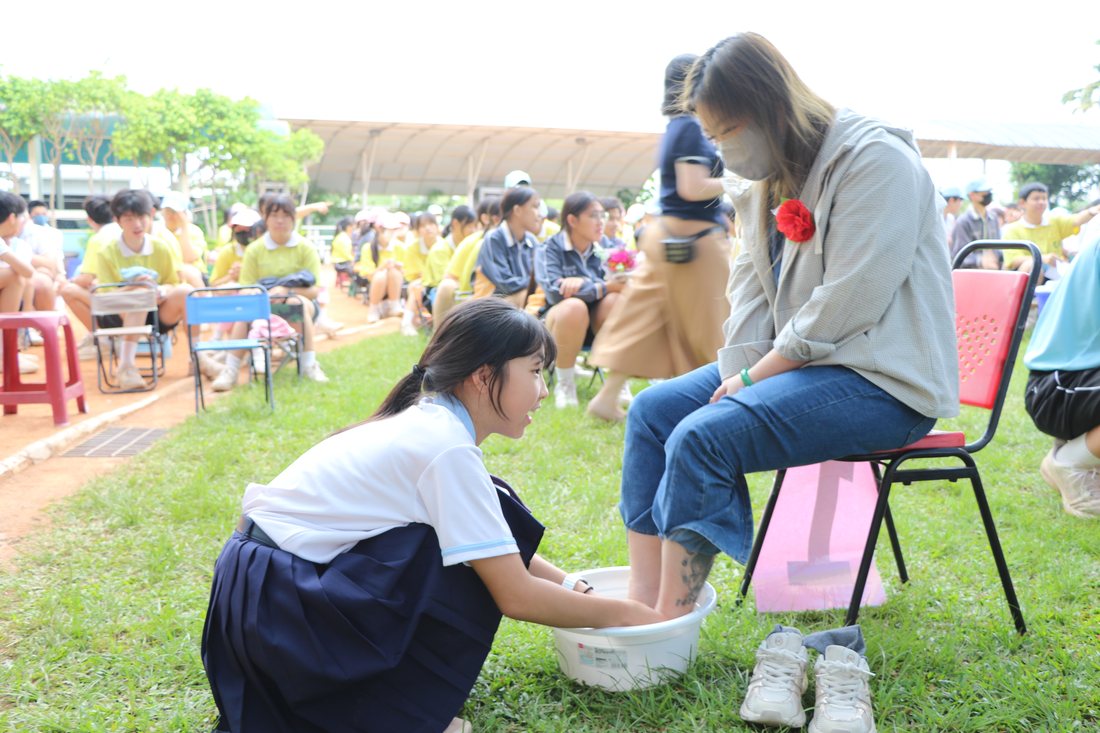
Since 2007, every Mother's Day brings a sight you would expect only in a church. Inspired by the act of washing another's feet — an image of humility and service — more than three hundred "elders" take part each year. They are not only mothers, but grandparents, fathers and aunts: whoever has raised the child.
The child brings a basin and a towel, presents a bright red carnation, then kneels, bends low, and gently washes the feet resting in the water. The elder's face lights up; words pass softly between them. Through this simple act, a child learns to say what is hardest to say — thank you, I respect you, I love you. One parent marvelled that a child who had never done a chore or greeted a soul came home polite, helping with the family business. "Truly," she said, "it is amazing."
"Life education is a child's asset for the future."「生活教育は、子どもの未来の財産である。」
"How good is Nan Jung? Just look at the toilets."
Students keep their own campus spotless — toilets included. The girls clean the boys' rooms too; they kneel on the floor and wipe by hand, untroubled by anyone's eyes. The toilets, students say, are "clean enough to eat in, even to sleep on the floor." And every graduating class, returning years later, says the same surprising thing: what they miss most is the toilets.
Behind it lies a single idea, taught to every student: "I am a quality global citizen of the future, and so I should know how to use a modern toilet well." From that conviction grows a whole discipline of care — demonstrated by staff, shared by homeroom teachers, refined each summer. Cleanliness here is not a chore. It is a way of saying that no honest work is beneath you, and that how you treat a shared space is how you treat one another.
Begins and ends with courtesy
The founder learned judo in Japan, and what he carried home was not the throws but the bow. "Judo begins with courtesy, and ends with courtesy," he would say; in the Nan Jung dojo — which he built at no small cost — etiquette, not victory, is the lesson. It is of a piece with everything else here: a school that treats good manners, fitting dress and self-discipline as the heart of an education, so that students leave not only with knowledge, but with the character to carry it.
Ten minutes, every morning
For nearly thirty years, the school day has opened with ten minutes of quiet reading — and the teachers read right alongside the students, a model so well kept that the school has been recognized for it. Add to that the long four-kilometer walks, the cup of tea offered to teachers on Teacher's Day, the community clean-ups and the care for elders, and a picture emerges: a school that believes the way a child lives, day after day, is the truest lesson of all.
"When you can hardly breathe for worry, look out at Nan Jung's scenery — and you will see how well our school song was written."「息も詰まるほど思い悩んだとき、南榮の風景を眺めてごらん。そうすれば、私たちの校歌がどれほどよく出来ているか、きっと分かる。」
← Back南榮では、品格は時間割の中の授業ではありません。母の日の一盆の水であり、塵ひとつない手洗いであり、毎朝の静かな十分間です——何十年も繰り返される小さな営みが、いつしか一人の子どもをつくり変えていきます。
親の足を洗う
2007年以来、母の日になると、教会でしか見られないような光景が広がります。他者の足を洗うという行い——謙遜と奉仕のかたち——に着想を得て、毎年300人を超える「目上の方々」が参加します。母親だけではありません。祖父母、父親、おばなど、その子を育ててくれた人すべてです。
子どもは盆と手ぬぐいを携え、真っ赤なカーネーションを差し出し、そして膝をつき、身をかがめて、水に浸した足をそっと洗います。目上の人の顔がほころび、二人の間に静かな言葉が交わされます。この素朴な行いを通して、子どもは最も言いにくい言葉を口にすることを学びます——ありがとう、尊敬しています、愛しています、と。ある保護者は驚きます。家事もせず、あいさつもしなかった子が、礼儀正しくなって帰り、家業まで手伝うようになった、と。「本当に」と彼女は言いました。「不思議なほどです。」
— the Nan Jung philosophy— 南榮の教育哲学
「南榮がどれほど良い学校か。手洗いを見ればわかる。」
生徒たちは自分たちの校舎を、手洗いも含めて、塵ひとつなく保ちます。女子は男子トイレも掃除し、床に膝をつき、人目を気にせず手で拭き上げます。生徒いわく、その手洗いは「中で食事ができるほど、床で眠れるほど」清潔です。そして、何年も経って母校に戻る卒業生は、決まって同じ意外な言葉を口にします。一番懐かしいのは、あの手洗いだ、と。
その背後には、すべての生徒に教えられる一つの考えがあります。「私は未来の世界の優れた市民である。だから、現代の手洗いを正しく使えるべきだ」。この信念から、心づかいの作法のすべてが育ちます——職員が手本を示し、担任が分かち合い、夏ごとに磨かれていきます。ここでの清掃は、面倒な雑用ではありません。どんな誠実な仕事も卑しくはないということ、そして、共有の場をどう扱うかは、人をどう扱うかと同じだということ——その静かな表明なのです。
礼に始まり、礼に終わる
創立者は日本で柔道を学び、持ち帰ったのは技ではなく礼でした。「柔道は礼に始まり、礼に終わる」と彼は語ります。少なからぬ費用をかけて建てた南榮の道場では、勝敗ではなく礼儀こそが学びです。それは、この学校のすべてと地続きです——礼儀正しさ、ふさわしい身なり、自律を教育の核とし、生徒が知識だけでなく、それを携えるにふさわしい品格とともに巣立つように。
毎朝の、十分間
30年近く、一日は十分間の静かな読書で始まります。しかも先生方が生徒のそばで一緒に本を読む——その実践はあまりに丁寧に守られ、学校はそれによって表彰されてきました。さらに、四キロの長い歩み、教師の日に先生へ捧げる一杯のお茶、地域の清掃、お年寄りへの心づかい。そこに一つの姿が浮かびます。子どもが日々どう生きるか——それこそが、何よりも真実の学びなのだと信じる学校の姿が。
— from 《國境之南榮》— 『国境之南榮』より
← 戻る난룽중학교에서 인성은 시간표에 적힌 한 과목이 아닙니다. 어버이날에 올리는 한 대야의 물이며, 티끌 하나 없는 화장실이며, 매일 아침 조용한 십 분입니다 — 수십 년간 반복되어 온 이 작은 실천들이 어느새 한 아이를 조용히 바꾸어 놓습니다.
부모님의 발을 씻겨드리다
2007년부터 어버이날이 되면 교회에서나 볼 법한 광경이 펼쳐집니다. 겸손과 섬김을 상징하는 세족(洗足) 의식에서 영감을 받아, 해마다 300명이 넘는 '어르신'들이 이 행사에 참여합니다. 어머니뿐 아니라 조부모, 아버지, 고모나 이모 등 아이를 길러준 모든 이가 그 대상입니다.
아이는 대야와 수건을 준비하고, 새빨간 카네이션을 건넨 뒤 무릎을 꿇고 몸을 낮추어 물에 담긴 어르신의 발을 조심스레 씻겨드립니다. 어르신의 얼굴에는 미소가 번지고, 두 사람 사이에 나직한 말들이 오갑니다. 이 소박한 행위를 통해 아이는 가장 하기 어려운 말을 건네는 법을 배웁니다 — 감사합니다, 존경합니다, 사랑합니다. 한 학부모는 집안일 한 번 해본 적 없고 인사조차 제대로 못 하던 아이가 예의 바르게 변해 집으로 돌아와 가업까지 돕더라며 놀라움을 감추지 못했습니다. "정말로," 그녀는 말했습니다, "신기할 정도예요."
"생활 교육은 아이의 미래를 위한 자산입니다."「生活教育は、子どもの未来の財産である。」
"난룽중학교가 얼마나 좋은 학교냐고요? 화장실을 보면 압니다."
학생들은 화장실을 포함해 교정을 스스로 티끌 하나 없이 관리합니다. 여학생들은 남학생 화장실까지 청소하며, 남의 시선을 개의치 않고 바닥에 무릎을 꿇고 손으로 직접 닦아냅니다. 학생들은 이 화장실을 두고 "안에서 밥을 먹어도 될 만큼, 바닥에서 잠을 자도 될 만큼 깨끗하다"고 말합니다. 그리고 몇 년 뒤 모교를 찾는 졸업생들은 하나같이 뜻밖의 말을 합니다. 가장 그리운 것이 바로 그 화장실이라고요.
그 배경에는 모든 학생에게 가르치는 하나의 신념이 있습니다. "나는 미래의 우수한 세계 시민이며, 그러므로 현대식 화장실을 제대로 사용할 줄 알아야 한다." 이 신념에서 세심한 배려의 문화 전체가 자라납니다 — 교직원이 모범을 보이고, 담임교사가 그 뜻을 나누며, 매해 여름 더욱 다듬어집니다. 이곳에서 청소는 귀찮은 잡일이 아닙니다. 그것은 정직한 노동은 결코 하찮지 않다는 것, 그리고 공동의 공간을 대하는 태도가 곧 사람을 대하는 태도라는 것을 말없이 보여주는 방식입니다.
예로 시작해 예로 끝나다
설립자 천야오훠(陳耀火)는 일본에서 유도를 배웠지만, 그가 고국으로 가져온 것은 기술이 아니라 예(禮)였습니다. "유도는 예로 시작해 예로 끝난다"고 그는 늘 말했습니다. 적지 않은 비용을 들여 지은 난룽의 도장에서 가르치는 것은 승패가 아니라 예의입니다. 이는 이 학교의 다른 모든 면모와 맞닿아 있습니다 — 바른 예절, 단정한 옷차림, 자율을 교육의 핵심으로 삼아, 학생들이 지식뿐 아니라 그것을 담아낼 인성까지 갖추고 졸업하도록 하는 학교입니다.
매일 아침, 십 분
거의 30년 동안 하루는 십 분간의 조용한 독서로 시작되어 왔습니다 — 교사들도 학생들과 나란히 책을 읽으며, 이 모범적인 실천이 잘 지켜져 학교가 이를 통해 표창을 받기도 했습니다. 여기에 4킬로미터에 이르는 긴 걷기 활동, 스승의 날 선생님께 올리는 한 잔의 차, 지역사회 봉사 청소, 어르신을 향한 보살핌까지 더해지면 하나의 모습이 드러납니다. 아이가 하루하루를 살아가는 방식이야말로 가장 참된 가르침이라 믿는 학교의 모습입니다.
"숨이 막힐 만큼 근심에 잠길 때면, 난룽의 풍경을 바라보세요 — 우리 교가가 얼마나 잘 쓰였는지 알게 될 것입니다."「息も詰まるほど思い悩んだとき、南榮の風景を眺めてごらん。そうすれば、私たちの校歌がどれほどよく出来ているか、きっと分かる。」
← 돌아가기